PRACTICE
What Age Should a Child Get a Phone? How to Spot the Right Moment
In short
At primary school age we advise against a smartphone of their own. After that there is no age that fits every child. Four signs matter: your child can judge dangers and talks to you, has stable friendships offline, you can guide their use, and the family rules are set before the handover.
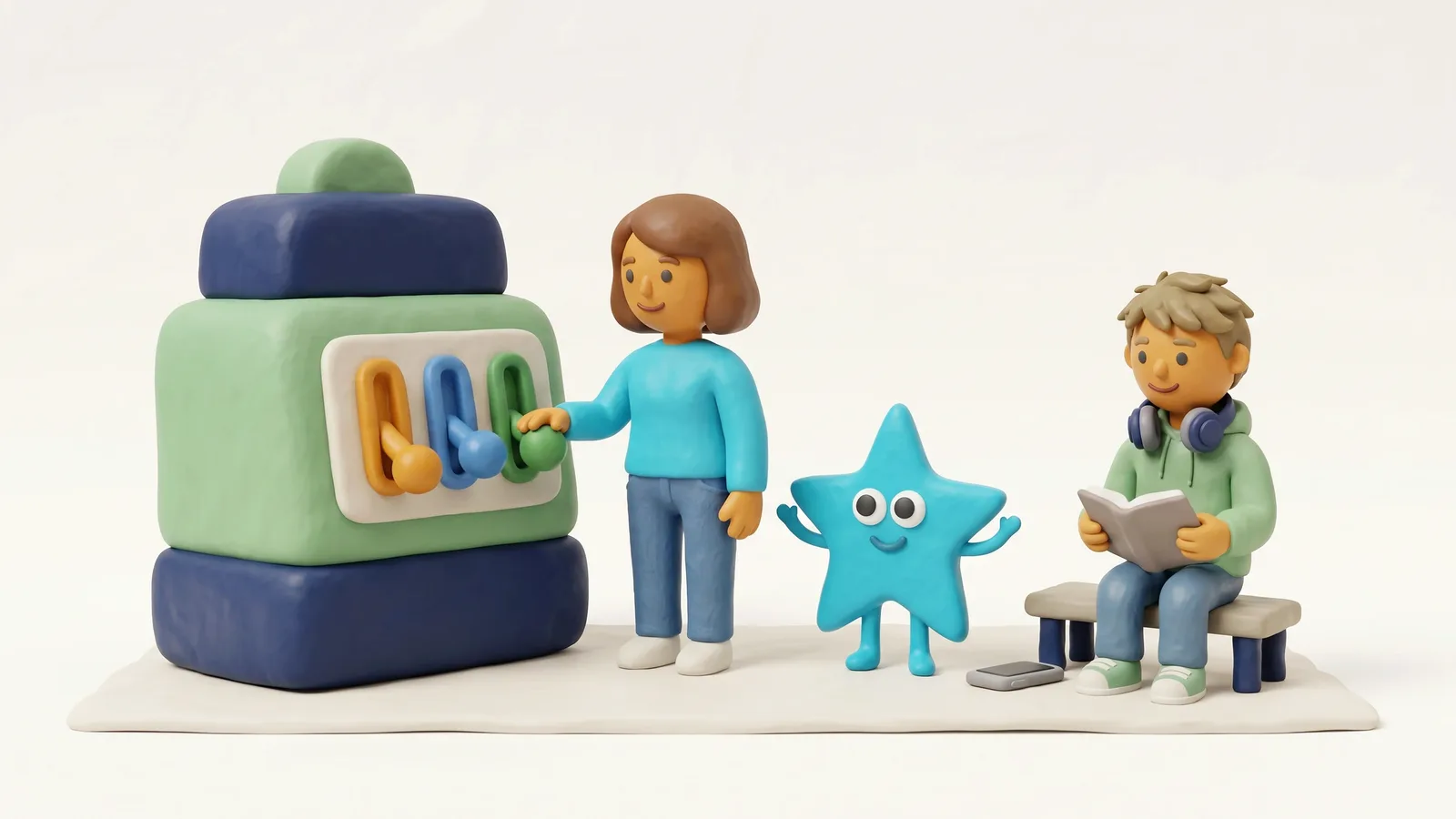
Tablets, consoles and a sibling's phone are long on your Wi-Fi. The Internet-Schutzschild filters adult sites, scam sites and a lot of ads there, directly at the router, with no app on your child's device. Set it up once, then it runs in the background.
Get Internet-SchutzschildWhat you can do today
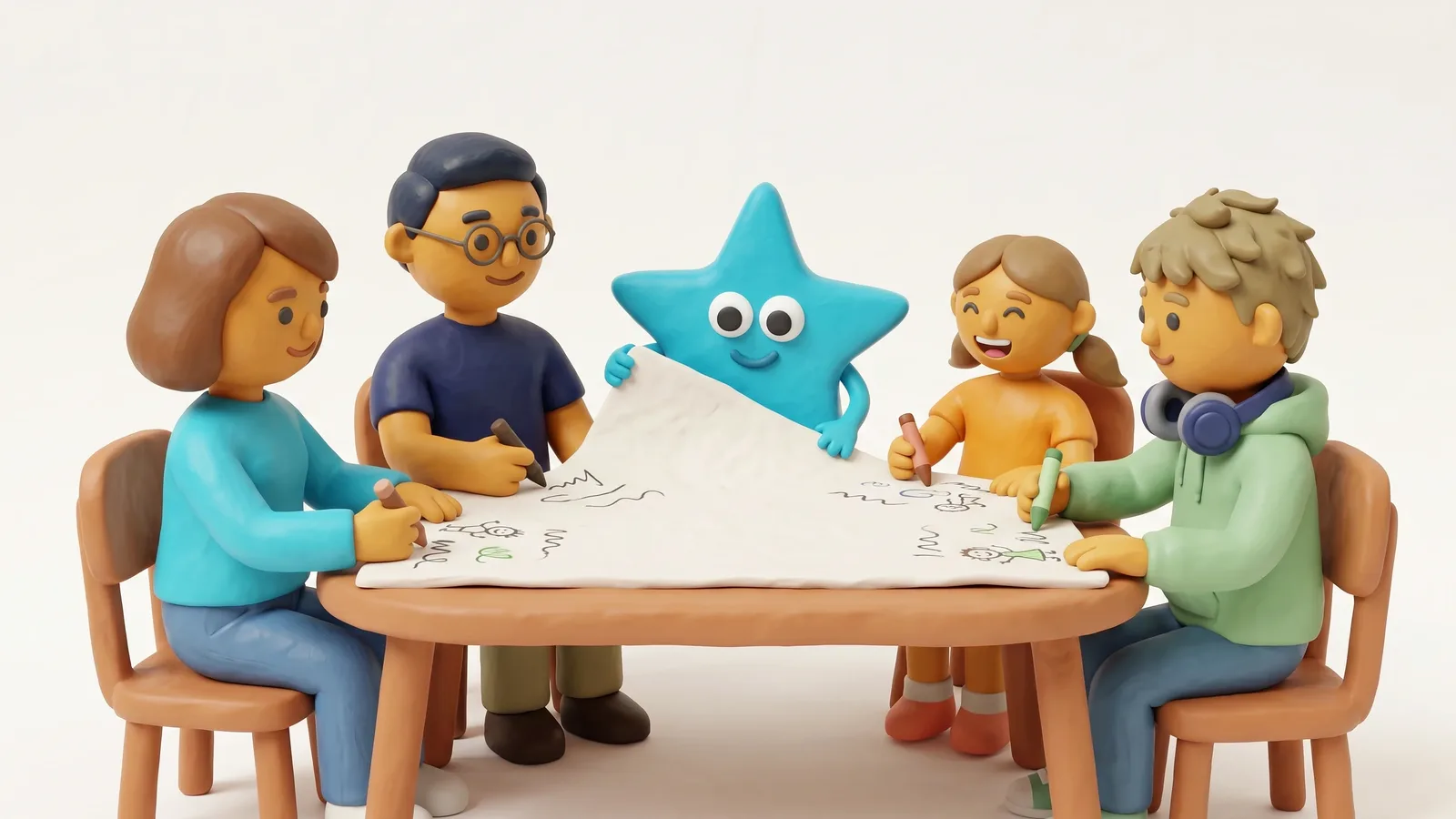
- Go through the four signs below together and mark which ones already apply. It takes five minutes.
- Use the free generator to set your family rules before a device comes into the house. To the media agreement
- This week, ask once what your child saw on a friend's tablet or phone. Curious, not like an interrogation.
Why not at primary school age
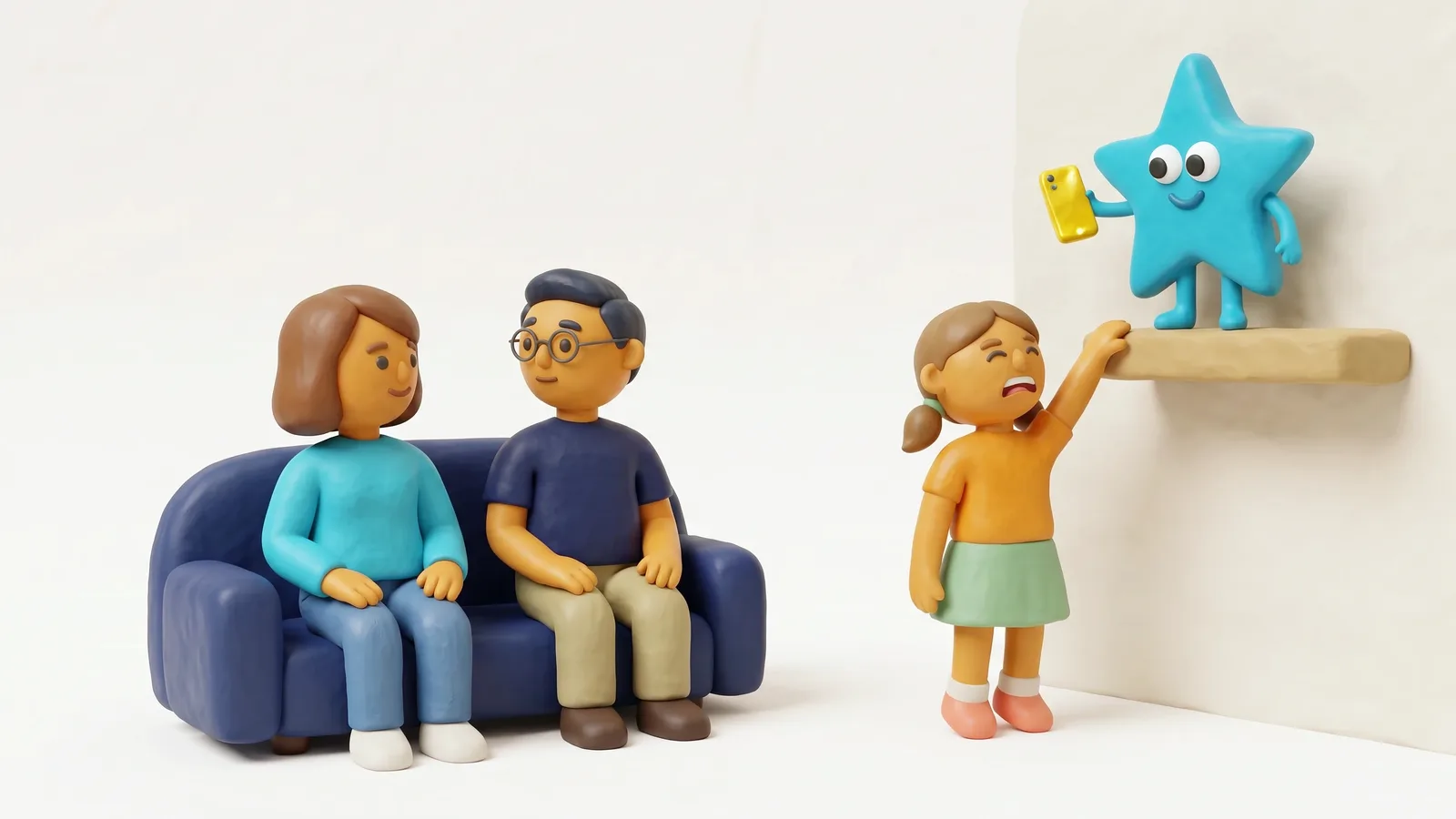
Primary school children often handle a smartphone faster than we do. The difficulty lies elsewhere: they can't yet judge online risks reliably, and they don't yet have the self-discipline to pull themselves out of a feed that never ends. The platforms are built for exactly that, with endless scrolling, videos that start automatically and likes as a small reward.
"No smartphone at primary school age (or even earlier!) — children can neither properly judge the dangers and risks of the online world, nor do they have anywhere near enough self-discipline." Koblitz, 2025 (translated from German)
And smartphones are not quite as widespread at this age as your child may claim. According to the KIM study 2024, just under half of 6 to 13-year-olds (46 %) have one of their own.
No device of their own doesn't mean no access
"A smartphone ban at home doesn't mean your child has no access to these devices." Koblitz, 2025 (translated from German)
Your child sits on a friend's sofa, looks over a shoulder on the bus or gets handed the big sister's phone. That is no reason to buy earlier, but it is a reason to talk earlier.
At home you can add some protection. The Internet-Schutzschild works at the router and so also covers the family tablet, the console and other devices on your Wi-Fi. It doesn't read anything and doesn't track a location. The protection sets the frame, the conversation stays with you.
Four signs that the moment is right
- Your child can judge dangers and talk about them. They know that a friendly stranger in a chat isn't automatically friendly, and they come to you when something felt odd.
- They have stable friendships offline. Whoever feels supported in real life needs the approval of a feed less urgently.
- You can guide their use. Not just want to: looking at the device together regularly takes time.
- The family rules are set before the handover. Rules that only appear after the first argument feel like punishment to children.
If three out of four apply
That means "not quite yet". Usually the rules are what's missing, and you can sort those out this week.
In detail
When your child says: "But everyone has one!"
Behind that sentence there is rarely an inventory, more often a feeling of not belonging. That is why a counter-question helps more than a counter-argument: who exactly has one? What do you do with it? What would you miss without it?
Often it's about a class group where dates are shared, or a game everyone plays. There are solutions without a device of their own: information via you as parents, an afternoon with friends at your place, a call on the landline. Don't smile the wish away. It's legitimate, only the timing is up for discussion.
Three ways your child stays reachable
The most common real reason for an early smartphone is reachability, not social media. One of three solutions is enough.
- Landline at home. Old-fashioned, but it solves half of everyday life: child arrives, child calls.
- Basic mobile phone. Calls and texts, the battery lasts a few days, no internet and no apps.
- Smartwatch for calls only. Handy for younger children who shouldn't yet carry something in their pocket that they might lose.
Location tracking: better not
Many children's smartwatches advertise GPS tracking. We advise against it. If you let your child walk around on a map permanently, you swap a brief feeling of safety for trust, and trust is hard to win back. Clear agreements on when your child checks in work better.
How common smartphones are at which age
The numbers show that the decision often falls earlier than parents planned.
| Study | Finding |
|---|---|
| KIM 2024 (6 to 13 years) | 46 % have their own smartphone, more than half from age 10 |
| KIM 2024 (8 to 9 years) | Daily internet use up from 23 % (2022) to 40 % (2024) |
| Bitkom Parents 2025 | First own smartphone at around 9 years on average |
| JIM 2025 (12 to 19 years) | 95 % own a smartphone |
From about age 12, the question is therefore usually no longer "whether" but "under which conditions". As of 13 November 2026, to our knowledge, Germany has no statutory minimum age for social media. The independent expert commission on child and youth protection in the digital world handed its recommendations to the German family ministry on 24 June 2026 (in German), and the federal cabinet adopted key points on 14 October 2026. Neither is a law yet.
Before the handover: settle three things
Once the decision is made, the first week shapes the next few years.
When and where the device stays out. Not in the bedroom at night, not at the dinner table, not during homework. These limits apply to you just as much.
Which apps to start with. Begin with a few. Adding more is easy, taking something away leads to arguments.
What happens when something goes wrong. Promise your child in advance: if something frightens you or someone writes to you in a strange way, you won't get in trouble for it. That promise costs nothing and protects most.
Put it in writing together. With the free NUNIVIA generator you get an age-appropriate media agreement to print in about five minutes, negotiated rather than imposed. What the duty of supervision means online is explained in Parents Are Liable for Their Children: What That Means Online.
If you're still wavering over whether a strict ban might be the easier way: Why bans don't work shows what holds up instead. And if several devices are on your Wi-Fi, Internet-Schutzschild or App Block? helps you choose between an app and router protection.
Sources
Elisabeth Koblitz: Aber alle haben ein Smartphone! Rowohlt, 2025. All quotes are from this book. Figures: KIM study 2024 and JIM study 2025 (Medienpädagogischer Forschungsverbund Südwest), Bitkom Parents 2025. Legal situation: German family ministry (BMBFSFJ), recommendations of the expert commission (24 June 2026) and federal cabinet key points (14 October 2026), checked on 13 November 2026.
Your Internet-Schutzschild: Set up in about 30 minutes.
Which settings you need, how to configure them on Fritz!Box, Speedport and other routers, and how to set up protection profiles by age — step by step, no jargon.
Get Internet-SchutzschildMore visibility over your home network?
A local filter in your home network protects all devices at once — smart TVs, consoles, and guest Wi-Fi included.
View NUNIVIA Home-Guide