PRACTICE
Building Media Habits as a Family: A Simple Method in Three Steps
In short
A media habit forms in three steps: you attach a tiny new behavior to a routine you already have (the anchor), keep it so small that it works even on tired days, and celebrate it briefly right away. For example: after dinner everyone puts their phones in the bowl, followed by a high five.
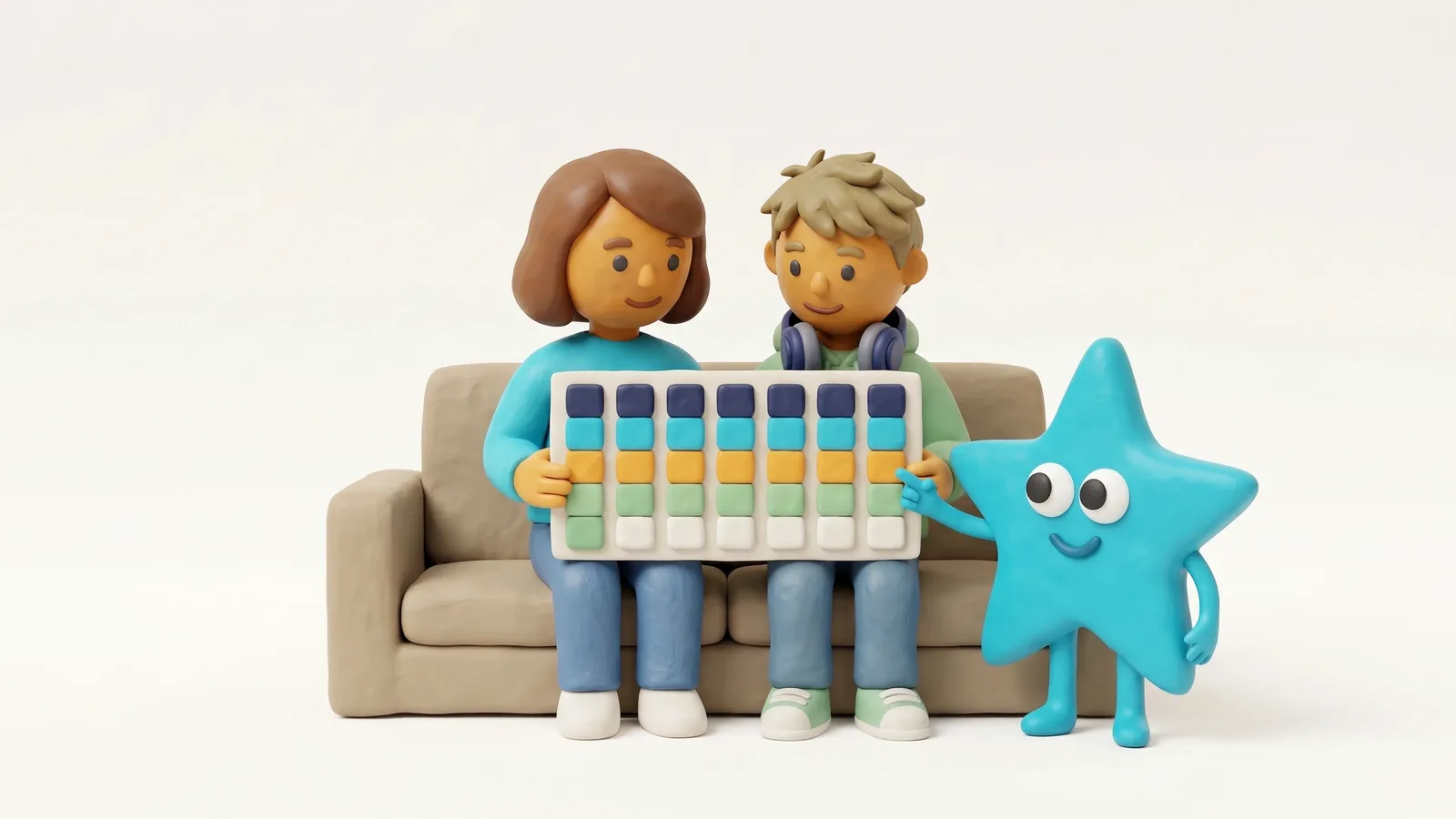
The free habit card helps you write down your recipe of anchor, tiny behavior and celebration. If you also want to secure your home network: the Internet-Schutzschild filters at the router, for the devices on your home Wi-Fi.
Download for free nowWhat you can do today
- Pick an anchor you have every day anyway, such as dinner, and think about what could be a tiny bit different afterwards. Five minutes is enough.
- Write your recipe on the free habit card and stick it on the fridge. To the habit card

A new family rule often lasts exactly until the third tired evening. Then come the discussions, and everything is back to how it was.
The behavioral researcher BJ Fogg rarely sees willpower as the problem. In his book Tiny Habits (2019) he explains how to design habits so that they work even with little energy.
Building media habits: anchor, tiny behavior, celebration
A recipe has three parts.
1. The anchor. A routine you already have that triggers the new habit. For example after dinner, when you get into the car or when the homework is done.
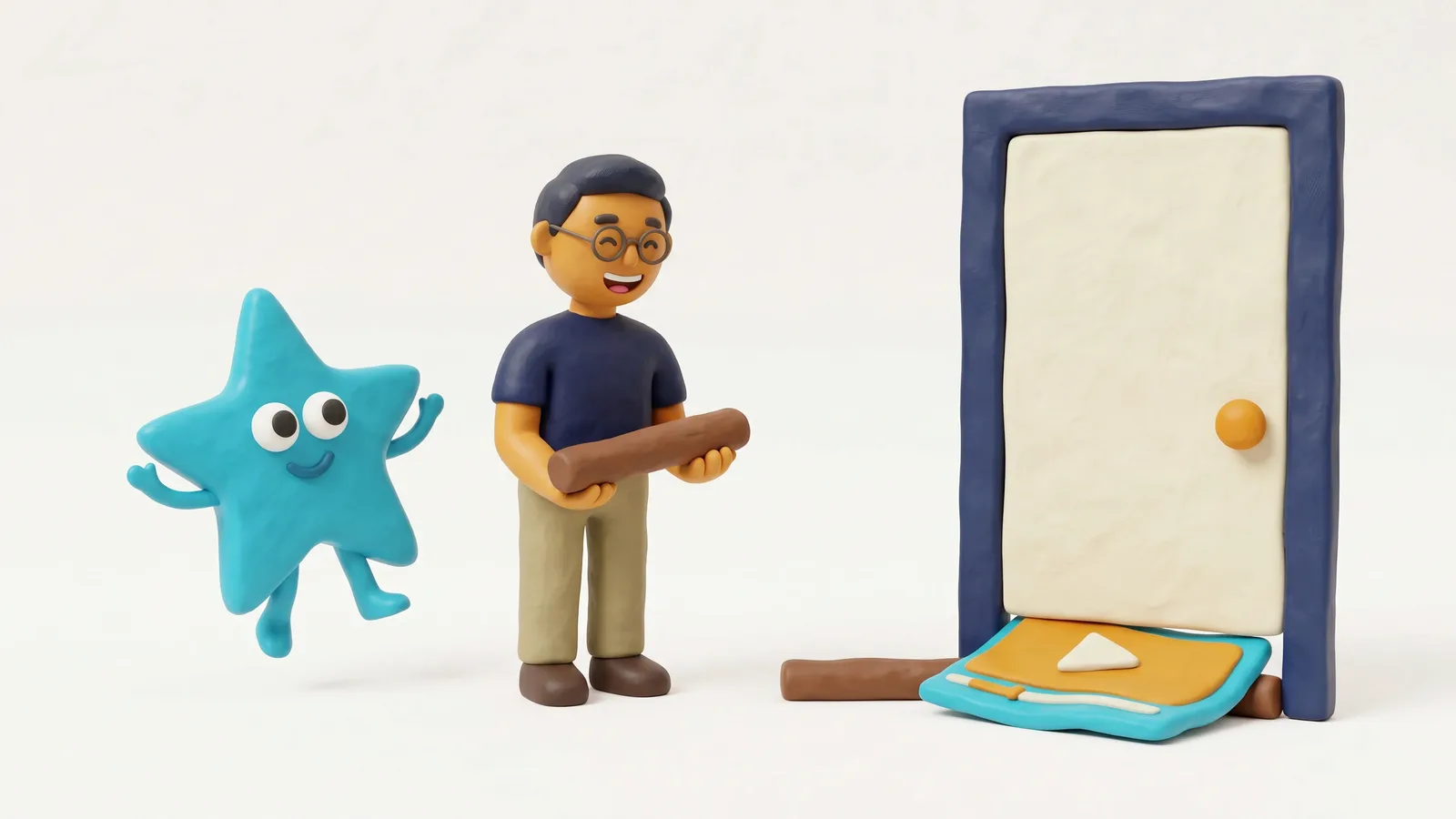
2. The tiny behavior. The new habit, so small that it still works at zero energy. "No more screens in the evening" is a goal, not yet a habit. A tiny behavior would be: "After dinner we all put our phones in the bowl on the sideboard."
3. The celebration. Right afterwards you celebrate briefly: a high five, a "Yes!", a smile. According to Fogg, emotions form habits, not repetition alone. That is why this step doesn't come at the end but straight after the behavior.
Three family recipes to try
- After dinner everyone puts their phones in the bowl in the hallway, then you clap together.
- After brushing teeth the phones charge outside the bedroom, and everyone names one good thing from the day.
- When you get into the car the phone stays in the bag, and you play "Who spots first ...?".
Start with one recipe, not all three. If it goes well for two weeks, the next one is added.
On NUNIVIA's free habit card you write down your recipe: print it, fill it in, stick it on the fridge. For your home network there is also the Internet-Schutzschild, which filters adult sites, scam sites and a lot of ads at the router. The conversation about rules stays with you either way.
In detail
Why so small?
Motivation fluctuates. Fogg describes it like this: on December 24th a lot comes easily, on the 26th it doesn't. A behavior that works even with little motivation therefore has a better chance of sticking in everyday life.
How to recognize an anchor
Good anchors are fixed points in family life where something happens anyway: brushing teeth, eating, getting in, coming home. The more reliable the anchor, the less you have to think about the new habit.
When it doesn't work
If a recipe doesn't work, the tiny behavior is usually still too big or the anchor not reliable enough. Make it smaller or look for another anchor.
If evening scrolling is the sticking point, The 3 Levers Against Screen Addiction shows which factor to start with.
Source
BJ Fogg: Tiny Habits: The Small Changes That Change Everything. 2019.
Free
Your Family Habit Card — free download
Micro-habits for your daily family life. Print, fill in, start immediately.
Download for free nowMore structure for your family routine?
The NUNIVIA Parent Course guides you step by step — with practical templates and a media agreement for your family.
To the NUNIVIA Parent Course