SCIENCE
Your Child Isn't Difficult: Their Brain Is Under Construction
In short
In puberty the brain breaks down existing connections and builds new ones. Meanwhile some abilities temporarily work worse than at ten: reading feelings in faces, braking impulses, switching off in the evening. According to Manfred Spitzer, the frontal brain only fully matures between 20 and 30. So ask: what can my child not yet do right now?
The Parent Course accompanies you through the phase in which rules and relationship have to fit together, with templates and an AI coach for your questions. You hold the conversation yourselves. In addition, the Internet-Schutzschild filters on your home Wi-Fi.
Go to Parent CourseWhat you can do today
- Take an argument from this week and ask yourselves: what could my child not yet do in that moment? Three minutes is enough.
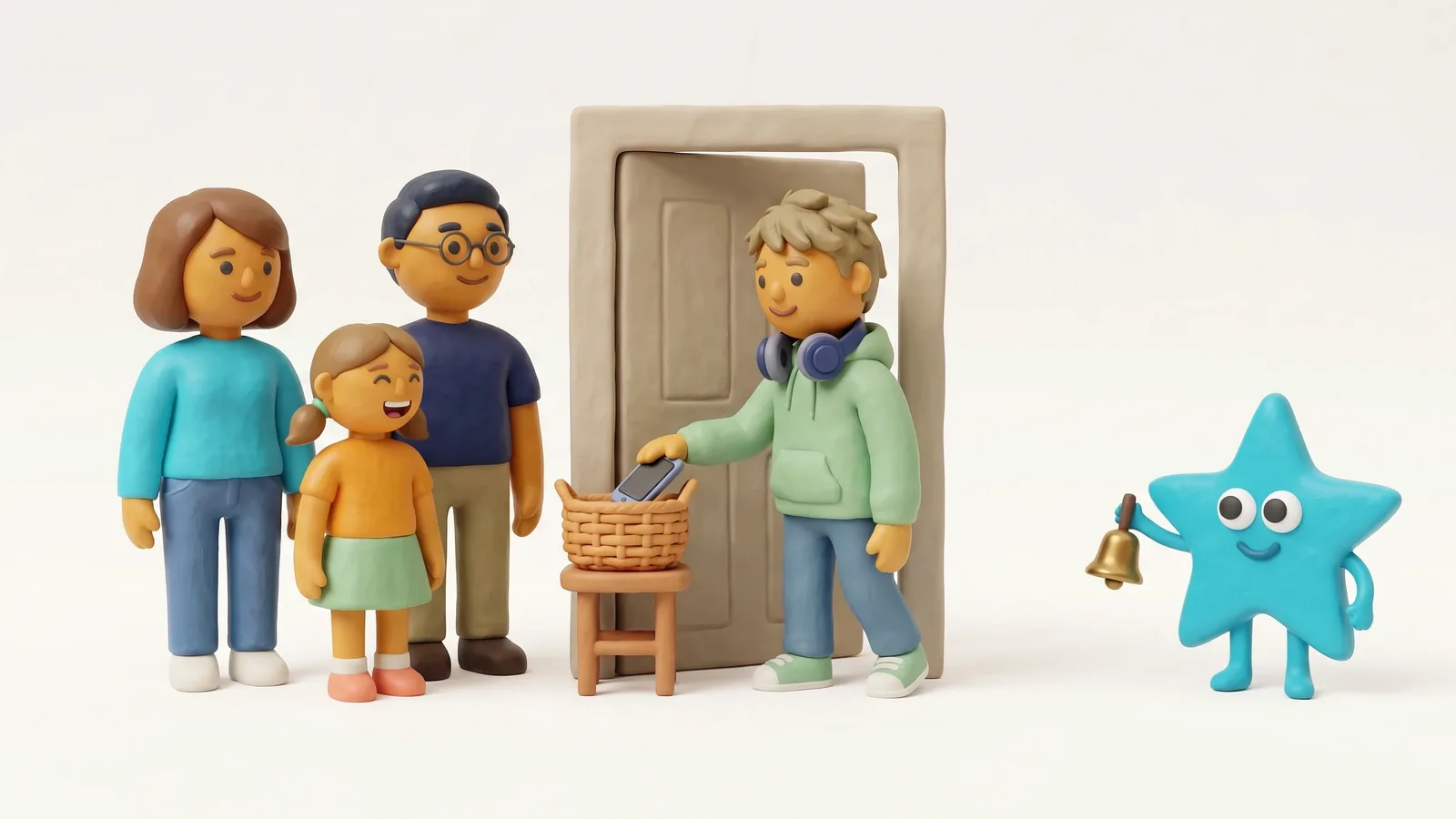
- Check together which rules for phone and sleep are already settled in your home and which only exist in your heads. To the media agreement
For a few months now your child has seemed like a different person. Doors close louder, answers get shorter, and a harmless question ends in an argument.
That is exhausting, and it often has to do with the brain. The brain researcher Manfred Spitzer describes it in his book Pubertät ist, wenn die Eltern seltsam werden (2014), in the following way.
Puberty and the brain: what is being rebuilt right now
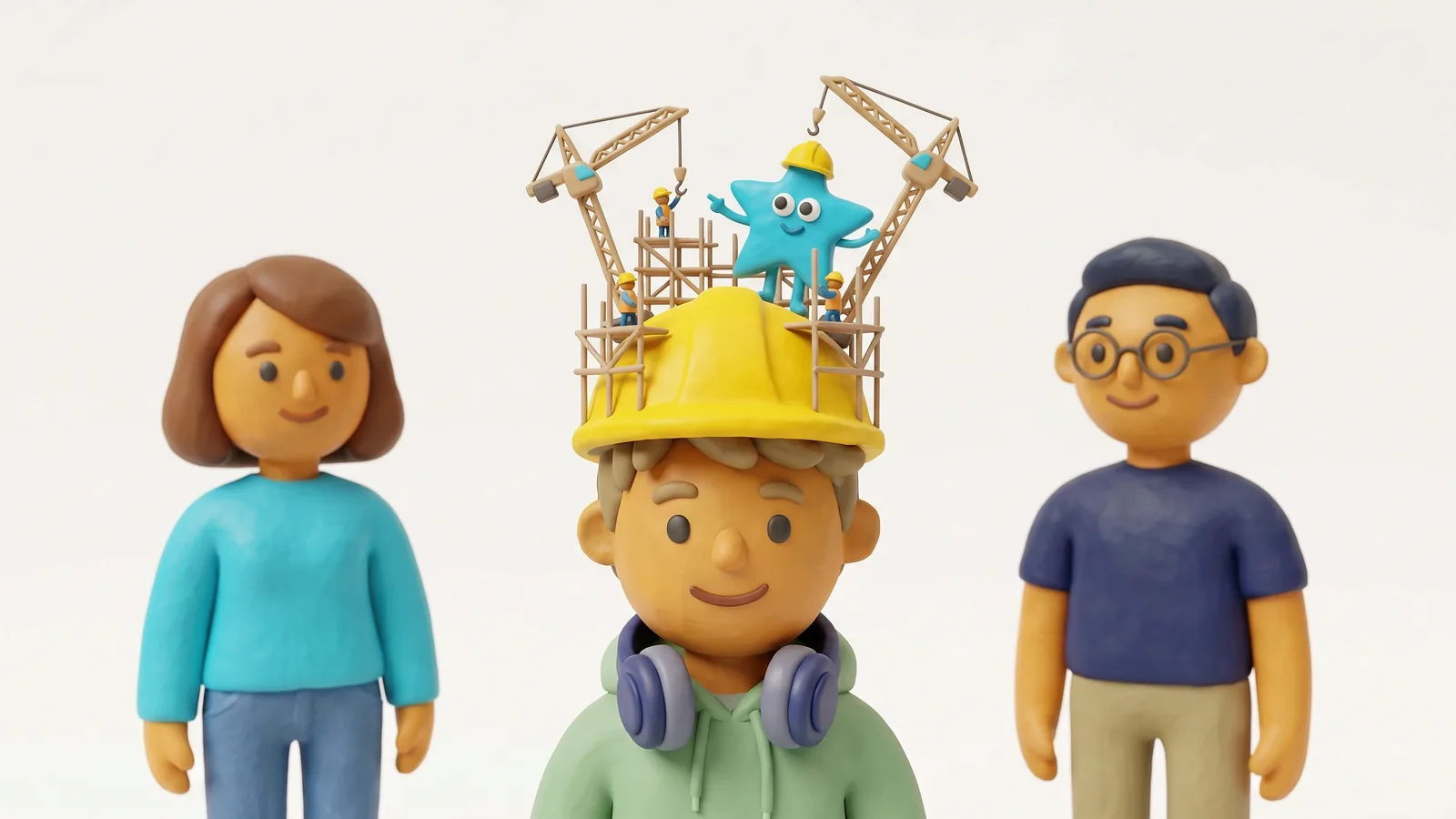
Hormones explain only part of it. According to Spitzer, in this time the brain breaks down existing connections and builds new ones. It is neither broken nor finished, but a building site. And on a building site some things work worse than before: at thirteen your child can do some things less well than they reliably could at ten.
Three examples from everyday life:
- Reading faces: your neutral look across the kitchen table lands as an accusation, your calm question as criticism.
- Braking: the phone should be gone at 9 pm. Your child knows that and often wants it too. At 10:40 pm they are still scrolling.
- Sleep: the inner clock shifts later, and screen light in the evening reinforces that.
According to Spitzer, the frontal brain, responsible for impulse control and planning, only fully matures between the ages of 20 and 30. A fifteen-year-old is working with unfinished equipment, and we often measure them by adult standards.
What you can do now
Instead of "Why is my child doing this?", ask: "What can my child not yet do right now?" The first question quickly leads to an accusation. The second asks about the cause and more often gives you something to work with in everyday life.
An order of priorities matters too: relationship first, then rule. You still need rules. For the phone they belong in the family and not only in the middle of an argument. A frame in your home network, such as a filter at the router like the Internet-Schutzschild, takes some of the load, but doesn't replace the conversation.
In detail
Two views of the same phase
Spitzer picks up a line that flips the perspective:
"Puberty is when the parents start getting difficult." Spitzer, 2014 (from the adolescent's point of view; translated from the German original)
Both sides go through the same phase, and both experience it as a change in the other.
The phases at a glance
| Phase | Age | What happens |
|---|---|---|
| Pre-puberty | 8–12 | Most formative phase: habits and family rules anchor most easily here. |
| Puberty | 12–16 | The actual rebuild: connections are pruned, hormonal changes come on top. |
| Young adulthood | 16–20 | Integration: the frontal brain keeps maturing, own values and identity stabilize. |
The division comes from Spitzer. Claudia and David Arp highlight pre-puberty as the decisive phase in Pubertät in Sicht (2017).
The brake isn't installed yet
According to Spitzer, teenagers do recognize risks. But the part of the brain that brakes at the decisive moment is still under construction. In everyday life the same principle shows up in a milder form: knowing and acting are two separate building sites.
Sleep is work
In sleep, the brain processes what it learned during the day. Sleeping in on the weekend is therefore not laziness but catching up. On top of the biological shift comes a technical one from screen light in the evening. That is one reason why the evening routine escalates in many families.
Understanding instead of a power struggle
"What children and adolescents need is understanding and a very flexible way of responding — one that precisely does not insist on principles, but keeps bringing understanding and keeps trying to build a bridge." Spitzer, 2014 (translated from the German original)
That doesn't mean letting everything slide. A rule that costs you the relationship has not paid off.
Enabling self-efficacy
Spitzer describes self-control as trainable. It is trained through experiences in which your own effort visibly leads to a result, for example through an instrument, a sport or a project that takes real perseverance.
"Anyone who has such experiences again and again will learn in the long run: I am the master of my own fate and I'll manage this." Spitzer, 2014 (translated from the German original)
The environment as building material
Spitzer refers to studies according to which aggressive content can go along with more aggression in the short term; prosocial content tends to work in the other direction. The research on this is not consistent. Still, the media environment remains a factor in this phase and no sideshow.
"It is not irrelevant what you do during puberty, which thoughts you occupy yourself with, and which environments you surround yourself with." Spitzer, 2014 (translated from the German original)
Sources
Manfred Spitzer: Pubertät ist, wenn die Eltern seltsam werden. Schattauer, 2014. All quotes come from this source. On pre-puberty: Claudia and David Arp, Pubertät in Sicht. Brunnen Verlag, 2017.
Clear rules, less conflict — the NUNIVIA Parent Course.
Learn how to set boundaries your kids will accept — and how to build healthy media habits as a family. Step by step, with practical templates.
Go to Parent CourseNot sure where to start?
The free family checklist shows you in 15 minutes where you're already on track — and where the gaps are.
Free family checklist